The Thali Formula: A Weeknight Blueprint for a Balanced Indian Plate
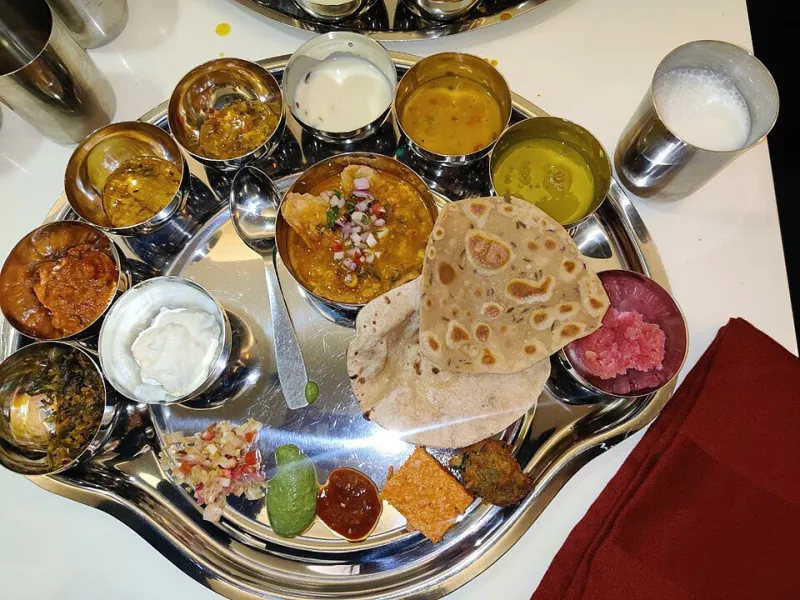
Photo: Hopeskilled, CC BY-SA 4.0, via Wikimedia Commons
A thali can look like a special-occasion spread: a big round plate, a cluster of little bowls, rice on one side, bread on the other, and a dozen things in between. That is one version. But at home, a thali is less a recipe than a formula. You do not need twelve bowls. You need a few components that balance each other, and you need to know what job each one is doing.
That is good news for a US weeknight. Most of the ingredients are already in a normal supermarket: rice, lentils, canned chickpeas, frozen vegetables, plain yogurt, cucumbers, lemons, and a jar of mango chutney or pickle. You can build a satisfying thali without hunting down a specialty store or following a rigid recipe.
What a Thali Is, and What It Is Not
A thali is not a single dish. It is a meal served on a plate, usually with small portions of several dishes arranged around rice or bread. The word refers to the plate itself in many Indian languages. The format shows up across the country, but the contents change by region, season, and household. A Gujarati thali might lean sweet and savory. A South Indian thali might center rice, sambar, and vegetable poriyal. A Bengali thali might include rice, dal, fish or vegetables, and a chutney.
It is also not a restaurant-only production. Home cooks build simple thalis all the time, especially for lunch or a relaxed dinner. The point is not abundance for its own sake. The point is balance: something soft, something crunchy, something tangy, something cooling, something spicy, and enough substance to make a meal.
The Six-Part Formula
Think of a thali in six parts. First, a grain: rice, or bread, or both. Second, a legume: dal, chickpeas, beans, or peas. Third, a vegetable, preferably two if you have the time, one wet and one dry. Fourth, a condiment: chutney, pickle, or a spoonful of something sharp. Fifth, something cooling: plain yogurt, raita, or a cucumber salad. Sixth, an optional crunch: papad, a few slices of raw onion, or a handful of sev.
You do not need equal amounts of each. A useful visual ratio is about one third grain, one quarter dal, and the rest vegetables, with condiments and cooling elements in small spoonfuls. If you are feeding hungry people, increase the grain and dal. If you want a lighter plate, lean on vegetables and yogurt. The formula is a compass, not a law.
Build It from a US Supermarket
For the pantry, keep basmati or jasmine rice, red lentils, canned chickpeas, and a bag of whole-wheat tortillas, pita, or naan. Frozen spinach, cauliflower, green beans, and sweet potatoes make the vegetable side easy. Plain yogurt, cucumbers, lemons, and a jar of mango chutney or Indian pickle cover the cooling and condiment jobs. Spices can be simple: cumin, mustard seeds, turmeric, and cayenne or paprika. You do not need a special curry powder, though you can use one if you like.
The cooking can be just as simple. Put rice in a rice cooker or pot. Simmer red lentils with water, turmeric, and salt until soft, then finish with cumin sizzled in oil. Roast cauliflower or sweet potato on a sheet pan. Warm tortillas or naan in a skillet. Stir yogurt with grated cucumber and a pinch of salt. Put chutney or pickle in a small bowl. That is a thali. It does not need to be more complicated than that.
Three Regional Sketches
A Gujarati-style plate often has a gentle sweet note alongside the savory dishes. Think dal, a simple cabbage or green bean shaak, rotli or tortilla, rice, pickle, and yogurt. A pinch of sugar or jaggery in the dal or vegetable is not unusual. The balance is sweet, salty, sour, and soft.
A South Indian-style plate might center rice with sambar or rasam, a dry vegetable poriyal, papad, and yogurt. If you do not want to make sambar from scratch, use a good store-bought sambar powder or a simple lentil broth with tamarind and vegetables. The point is the rice-and-legume pairing with something crunchy and something cooling.
A Bengali-style plate often pairs rice with dal, a fish or vegetable dish, and a chutney. For a weeknight, skip the fish if you are short on time and use paneer or cauliflower. Add a tomato chutney from a jar if you have one. The plate should feel clean and balanced, not heavy.
Weeknight Version, Weekend Spread
On a weeknight, aim for forty minutes and one pot of dal, one skillet of vegetables, and rice in the cooker. Use store-bought chutney or pickle and plain yogurt. That is enough. The thali format makes a simple meal feel complete because the components are separate and each one has a job.
On a weekend, add a second vegetable, a homemade chutney, papad, and maybe a chicken or fish dish if you eat meat. You can also make a larger pot of dal and reheat it later in the week. A thali is forgiving. Leftover roasted vegetables, a bit of paneer, or a can of chickpeas can all find a place on the plate.
The Balance Test
Before you sit down, look at the plate. Do you have color? Do you have something creamy and something crunchy? Is there acid from lemon, yogurt, or pickle? Is there salt and heat? If everything is brown and soft, add cucumber, lemon, or a handful of papad. If everything is spicy, add yogurt. If the plate feels dry, add dal or a little chutney. If it feels heavy, add a plain vegetable.
The thali formula is not about matching a restaurant photo. It is about giving yourself options in every bite. Once you know the jobs, you can improvise with what is in your fridge. That is the real blueprint: grain, legume, vegetable, condiment, cooling, and crunch, adjusted to your taste and your Tuesday night.