Call It by Its Name: Why 'Curry' Shortchanges Regional Indian Cooking
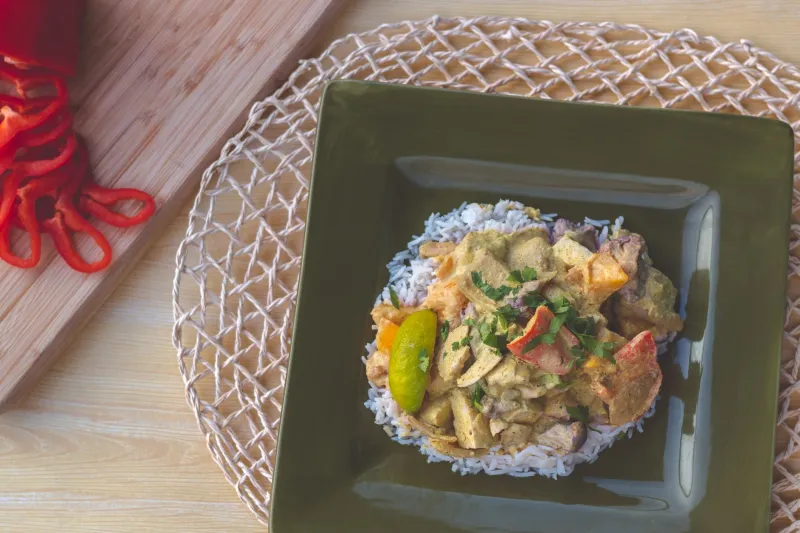
There is a word that does a lot of work on Indian menus in the US, and not all of it is helpful: curry. It can mean a stew, a sauce, a spice blend, a menu section, or a vague promise of gravy. The word is not wrong. Plenty of Indian languages have cousins of it, and plenty of Indian families use it at home. But on a restaurant menu, curry often hides more than it explains. For a diner trying to branch out, that is a loss.
Curry Is a Category, Not a Dish
Think about how we talk about Italian food in the US. You would not order pasta without knowing whether it is rigatoni with tomato sauce, linguine with clams, or lasagna. Pasta is a category. It is useful as a starting point, but it is not the whole story. Curry works the same way. It can point you toward a saucy, spiced dish, but it does not tell you whether the sauce is coconut-rich or yogurt-sour, whether the heat comes from black pepper or dried red chile, or whether the dish is a centerpiece or a side.
That matters because Indian cooking is regional. A kitchen in Kerala on the southwest coast cooks with coconut, curry leaves, and fish. A kitchen in Punjab in the north leans on wheat, dairy, and robust masalas. A Bengali kitchen might build a dish around mustard oil and panch phoron. These are not small variations on one national dish. They are different cooking traditions with their own pantry logic, techniques, and names. When a menu collapses all of that into curry, it asks diners to guess.
What Gets Lost from Kerala to Punjab
Consider Kerala fish moilee. The name alone tells you something: it is a fish dish, and it comes from a coastal region where coconut milk is a normal cooking medium. A good description might add white fish, green chile, curry leaves, and a gentle simmer. That is useful. A diner knows to expect something creamy, aromatic, and not necessarily fiery. If the menu just says fish curry, the diner has no idea whether the bowl will be coconut-sweet, tamarind-sour, or chile-hot.
Punjabi kadhi is another example. Kadhi is a yogurt and gram flour preparation, often with pakoras or vegetables, and it has a tangy, savory, comfort-food personality. It is not the same as a tomato-onion chicken curry, and it does not pretend to be. The name kadhi helps a diner understand that the sourness comes from fermented yogurt, not from tomatoes or vinegar. It also signals a different texture: silky, a little thick, and often spooned over rice.
Goan vindaloo is another case. The name has history behind it, tied to Portuguese influence and vinegar-based preservation in Goa. A menu that simply calls it hot curry misses the point. The vinegar, garlic, and chile are part of the dish's identity. Chettinad chicken signals a South Indian pepper-forward masala. Bengali shorshe ilish signals mustard and fish. These names are not decoration. They are practical information.
Why Names Help You Order
Learning a few dish names can change an Indian restaurant meal from a guess into a conversation. When you see moilee, you can ask whether it is coconut-based. When you see kadhi, you can ask whether it comes with pakoras. When you see vindaloo, you can ask about the vinegar and the heat level. The server can answer with specifics instead of a generic warning.
Names also help you recognize regional differences. If you order moilee and then kadhi, you are not just ordering two curries. You are tasting two different ideas about what a sauce should do. One is coastal, coconut-rich, and gentle. The other is northern, yogurt-sour, and earthy. That contrast is the pleasure of regional Indian cooking. It is hard to taste the contrast if the menu calls everything the same thing.
There is a practical benefit, too. Dish names help you build a balanced table. A dry, peppery dish might want rice and a cooling raita. A creamy moilee might want plain rice and a crunchy vegetable. A tangy kadhi might want bread or rice and a pickle on the side. Once you know what the dish is, you know what to order with it.
Darbar's Menu as a Case Study
At Darbar Indian Cuisine, we try to let names do their job. Our menu lists Kerala Fish Moilee with a plain-English note about white fish, coconut milk, curry leaves, and green chile. We list Punjabi Kadhi with yogurt, gram flour, pakora, and mustard seeds. We list Chettinad Chicken with black pepper, fennel, and roasted coconut. The descriptions are not there to dumb down the food. They are there to translate the name without erasing it.
That approach helps US diners who are curious but not yet fluent in regional Indian menu language. You can still order by heat level if that is what you want, but you can also order by texture, sauce base, or region. You can ask for something creamy, something tangy, something dry, or something pepper-forward. The menu becomes a map instead of a guessing game.
We do not think curry is a bad word. It is a useful shorthand in many kitchens, and it can be a comfortable entry point. But a menu can use the word and still give the dish its name. The two are not in conflict. The problem is when curry becomes the only information a diner gets.
How to Order Like a Name-Reader
Next time you look at an Indian menu, try asking three questions. What region is this dish from? What is the sauce base? Is it wet or dry? Those questions will get you further than a generic mild, medium, or hot scale. If the menu only says curry, ask the server what makes that curry different. A good kitchen will have an answer.
The payoff is not just accuracy. It is pleasure. A named dish has a personality. Moilee is not just curry. Kadhi is not just curry. Vindaloo is not just heat. When you learn the names, you start to taste the differences. And once you taste the differences, you want to keep exploring.