Beyond Basmati: Mapping India's Rice Bowls to Your Curry
Ask for rice with a curry in the United States and you will usually get basmati. It is a fine default: long, separate, aromatic, and built for soaking up sauce. But basmati is not the whole story of Indian rice, and treating it as the only option is a bit like assuming every American sandwich is made on the same bread. India grows thousands of rice varieties, and each region has its own grain, texture, and way of meeting a curry. The right rice does not just fill space on the plate. It changes how the sauce tastes, how the meal feels, and how full you are at the end.
Why the Grain Matters
Rice is not neutral. A long, aged basmati stays distinct and lifts perfumed Mughlai sauces without turning gluey. A softer South Indian grain like sona masoori wraps around sambar and rasam, catching broth in its slight stickiness. A red Kerala matta brings an earthy chew to fish curry. A short Bengali gobindobhog turns creamy and sweet next to mustard fish. None of these is better in the abstract. They are different tools for different regional meals.
That matters for home cooks because the wrong rice can make a good curry feel off. Serve a delicate Chettinad pepper chicken over sticky short-grain rice and the sauce disappears into the starch. Serve a soupy Kerala fish curry over tight, separate basmati and the broth rolls away instead of clinging. Matching grain to dish is one of the quiet skills of regional Indian cooking.
A Short Rice Map of India
Basmati: The North Indian Celebrations Grain
Basmati is the long-grain aromatic rice most Americans know. Aged basmati is drier and more separate than new-crop basmati, which is why restaurant biryanis and pulaos often use it. Pair it with butter chicken, rogan josh, dal makhani, chana masala, and anything with a thick, rich gravy. It is also the right choice for jeera rice and most North Indian restaurant plates.
Sona Masoori: The South Indian Everyday Grain
Sona masoori is a medium-grain rice from the south, lighter than basmati and a little more clingy. It is the rice you want with sambar, rasam, vegetable poriyal, and everyday Andhra or Karnataka meals. In US Indian groceries it is often sold as sona masoori or sonamasuri. Do not expect the same separate grains as basmati; its job is to be soft, comforting, and absorbent.
Ponni: The Tamil Nadu Table Rice
Ponni is another South Indian staple, especially in Tamil Nadu. It has a firm, slightly chewy grain and comes as raw rice or boiled rice. Ponni holds up well to tamarind-heavy curries, Chettinad pepper dishes, and kuzhambu. If a restaurant offers steamed rice with a South Indian meal, ponni or sona masoori is often what arrives.
Matta: Kerala's Red Earth Rice
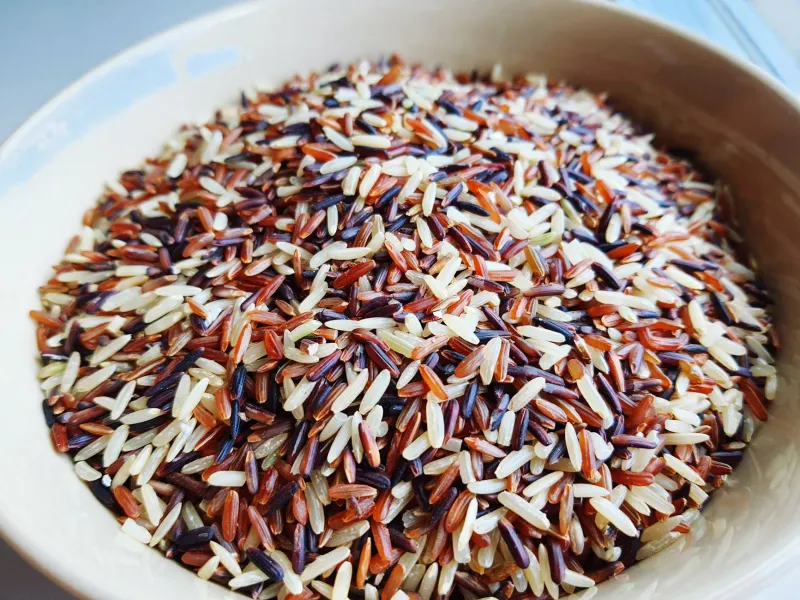
Matta rice is a red or reddish-brown rice from Kerala with a hearty, earthy flavor and a firm bite. It is the classic partner for Kerala fish curry, beef ularthiyathu, and thoran. The grain is not trying to be delicate. It stands up to coconut, tamarind, and chile, and it makes a curry feel like a full meal rather than a sauce over starch.
Gobindobhog: Bengal's Sweet, Sticky Aromatic
Gobindobhog is a short-grain aromatic rice from Bengal, used for everyday meals and festive dishes. It cooks softer and stickier than basmati, with a gentle sweetness. Serve it with Bengali fish curry, dal, or a simple ghee-and-salt finish. It is also the kind of rice that makes a US home cook rethink the idea that all Indian rice should be fluffy and separate.
Jeerakasala and Ambemohar: The Fragrant Specialists
Jeerakasala is a tiny, aromatic rice from Kerala, often used in biryanis and special-occasion dishes. Ambemohar is a fragrant short-grain rice from Maharashtra with a distinctly sweet aroma. These are not everyday supermarket grains in most of the US, but they are worth trying if you shop at an Indian grocery or order from a specialty supplier. They show how much fragrance and texture vary across the country.
What to Order at an Indian Restaurant
At a restaurant, the rice question is not rude. It is useful. Ask what rice comes with the dish, especially if the menu says only steamed rice. If you are ordering a North Indian curry, basmati or jeera rice is the safe, traditional match. If you are ordering dosa, sambar, rasam, or a South Indian thali, ask for steamed rice and expect a softer grain. If fish curry is on the menu, ask whether they serve matta or another red rice; if they do, order it.
Biryani is its own case. Good biryani is made with the rice the kitchen chooses for that style, and it should not be swapped for plain basmati on the side. Ghee rice and curd rice usually call for short- or medium-grain rice, not long-grain basmati. When in doubt, ask what the kitchen would eat with the dish. That question tends to get a more useful answer than a generic rice upgrade.
Reading Labels in a US Grocery Store
US grocery labels can be loose. A bag marked long-grain white rice is not basmati. A bag marked basmati may be a blend, so check the ingredient list if the price seems too good. Aged basmati is usually labeled as aged, and it is worth the small extra cost for biryani and pulao. Sona masoori may appear as sona masoori, sonamasuri, or medium-grain South Indian rice. Matta is often labeled Kerala red rice or matta rice. Gobindobhog may be spelled gobindo bhog.
Avoid seasoned rice mixes and microwave rice pouches if you are trying to match a regional dish. They are convenient, but the seasoning and texture are not designed for Indian curries. Buy small bags when you are experimenting. Rice keeps well, but a five-pound bag of a grain you do not like is a long reminder.
Cooking Notes That Actually Help
Rinse rice until the water runs mostly clear. Soak basmati for 20 to 30 minutes before cooking if you want especially separate grains. Use roughly 1 cup rice to 1.5 cups water for basmati, 1 to 2 for sona masoori or ponni, and 1 to 1.5 for gobindobhog, adjusting for your pot and your rice's age. Salt the water. Let the rice rest covered for 10 minutes after cooking, then fluff gently. Do not stir it like risotto unless the dish calls for that texture.
At Darbar Indian Cuisine, rice is part of the regional story, not a blank side. The next time you order a curry, ask what grain is underneath it. The answer may change what you order next.