The Dessert Course Has a Map: Ordering Indian Sweets by Region, Not by Sugar
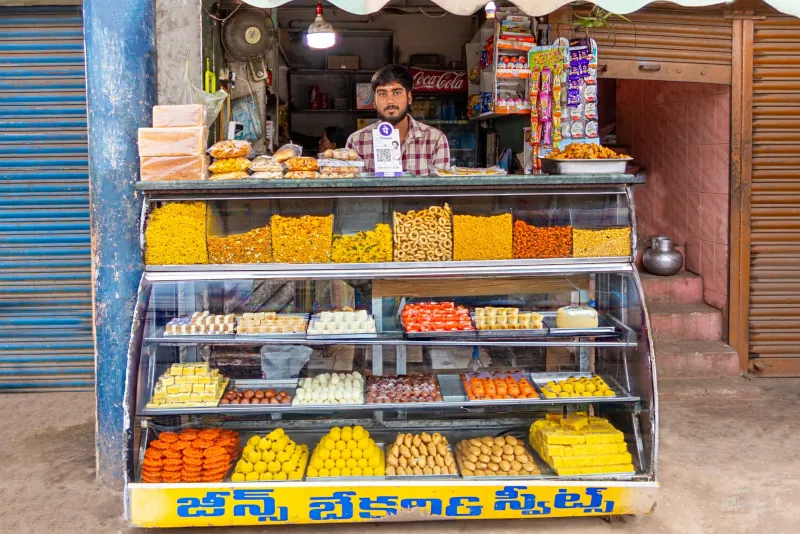
Indian desserts get a bad first impression in a lot of US restaurants. Someone orders one thing, takes a bite, and decides the whole category is too sweet, too dense, or too much. That is a little like trying one brownie and concluding that all American dessert is fudge. Mithai is not a single flavor. It is a family of sweets shaped by region, texture, temperature, and the way Indians actually eat dessert: in small pieces, often with chai, usually in the middle of a celebration.
So instead of asking whether Indian sweets are sweet — they are — ask a better question: what kind of sweet is on the plate? Once you sort mithai by texture and region, the dessert course stops feeling like a sugar test and starts feeling like the natural end of the meal.
Start with texture, not sugar
Most Indian sweets fall into four broad families: milk-based, syrup-soaked, fried or griddled, and fruit-forward or chilled. The sweetener is not the point. The point is what carries it. Reduced milk gives you a fudgy bite. Syrup gives you a soft, warm soak. Hot fat gives you crisp edges. Yogurt or fruit gives you a cool, tangy finish.
That is why the same amount of sugar can feel completely different from one sweet to the next. A piece of barfi is dense and slow-eating. A warm gulab jamun is soft and syrup-heavy. A spoon of shrikhand is cool and tart. Ordering one of each is a better strategy than ordering a large portion of any single thing.
Milk-based sweets: the north and east
Milk is the backbone of a huge swath of Indian sweets, especially in the north and east. In the north, milk is slowly reduced until it turns thick and slightly caramelized, then shaped into barfi or peda with cardamom, saffron, pistachio, or rose. The texture is close to a soft fudge, and a small square is enough.
Bengal takes milk in a different direction. Chhena — fresh cottage cheese made from cow milk — becomes the base for sandesh, those delicate, grainy-smooth sweets that taste like milk and cardamom rather than pure sugar. Rasmalai, soft cheese discs soaked in thickened saffron milk, sits somewhere between north and east on the map, and it is one of the easiest entry points for a US diner. It is creamy, cold, and gentle.
If you see sandesh on a menu in 2026, order it the way you would order a good cheese: one piece, eaten slowly, with something bitter or hot to drink alongside.
Syrup-soaked sweets: gulab jamun and rasgulla
Gulab jamun is probably the most familiar Indian sweet in the US, and it is also the one most often misunderstood. These are fried milk-solid dough balls soaked in rose or cardamom syrup. They are not donut holes. They are not cake. They are soft, spongy, and built to hold syrup, and they are best served warm.
Rasgulla is the lighter cousin: spongy chhena balls in a clear sugar syrup, often served chilled. Bengal and Odisha both claim versions of it, and the texture is the tell. A good rasgulla should feel delicate, not rubbery, and the syrup should taste clean rather than cloying.
At the end of a spicy meal, one gulab jamun split between two people can be exactly right. A whole bowl is a different experience. Order small, and treat it like a strong espresso: a little goes a long way.
Fried and griddled sweets: jalebi, malpua, and balushahi
Fried sweets are where Indian dessert gets its crunch. Jalebi is the most recognizable: bright orange coils of batter fried until crisp, then briefly soaked in saffron syrup. Eat it hot. A cold jalebi is a sad jalebi. In many Indian households, jalebi is a breakfast food or a festival treat, not a plated dessert, which tells you something about how flexible mithai is.
Malpua is a small fried pancake, often soaked in syrup and topped with rabri, a reduced milk cream. Balushahi is a flaky, glazed fried pastry with a texture closer to a biscuit than a cake. These sweets belong to festivals and celebrations, especially in the north and west, and they reward anyone who likes contrast: crisp outside, soft inside, sweet but not one-dimensional.
Fruit-forward and chilled: shrikhand, aamras, and kulfi
Not every Indian dessert is heavy. Shrikhand is strained yogurt mixed with sugar, saffron, and cardamom, and it is a specialty of Maharashtra and Gujarat. It is tangy, cool, and thick, and it makes a convincing case that Indian dessert can be refreshing. Aamras is simply sweet mango pulp, often served with poori during mango season. Kulfi is dense frozen milk, closer to a rich ice cream than a sorbet, and it comes in flavors like pistachio, cardamom, and rose.
These are the sweets to order when the meal has been long and rich, or when the weather is hot and you want something cold. They also pair well with strong tea or coffee because the acidity and chill cut through the spice.
A quick regional cheat sheet
- North India: barfi, peda, gulab jamun, rasmalai, malpua.
- East India, especially Bengal and Odisha: sandesh, rasgulla, chhena-based sweets, payesh.
- West India, especially Maharashtra and Gujarat: shrikhand, puran poli, balushahi, jalebi.
- South India: payasam, kesari halwa, Mysore pak, coconut-based sweets.
This is not a rigid map. Sweets travel, menus mix regions, and every family has its own version. But it gives you a way to ask for what you actually want: something creamy, something syrupy, something crisp, or something cool.
How to order dessert without the sugar shock
First, share. Indian sweets are often richer and denser than US desserts, and a little goes further than you expect. Second, mix textures. Order one milk-based sweet, one syrup-soaked sweet, and one fruit-forward or chilled sweet if the menu allows it. Third, ask what is made in-house. Freshness matters enormously with mithai, especially fried sweets and anything made with chhena.
And finally, pair the sweet with something bitter or hot. Chai is the classic move. Black coffee works surprisingly well with barfi and sandesh. A small piece of mithai after a meal is not supposed to replace a slice of cake. It is supposed to close the meal the way a good bite of dark chocolate might: with a little richness, a little texture, and a clear full stop.
On your next visit to Darbar Indian Cuisine, save room for the dessert list. Order one thing you recognize and one thing you do not. The point is not to prove that Indian sweets are not sweet. The point is to find the one that fits the end of your meal — and then to understand why it belongs there.