Before the Spice Hits the Pan: How Cooking Fats Set India’s Regional Accents
At Darbar Indian Cuisine, we talk a lot about spices, and for good reason. But before the cumin hits the pan, before the mustard seeds pop, there is another decision that quietly steers the whole dish: the fat. In regional Indian cooking, the cooking medium is not just a delivery system for heat. It is part of the flavor architecture. Ghee, mustard oil, and coconut oil each carry a place, a history, and a distinct kitchen personality.
That is good news for US home cooks. You do not need a dozen specialty fats to cook regionally. You need to understand what each one does, how to buy a decent version, and when a swap makes sense—and when it just makes a different dish.
Ghee: The Slow, Nutty Baseline
Ghee shows up across India, but it has a particular resonance in Punjabi and Mughlai-leaning kitchens, where its toasted, nutty richness reads as hospitality. A spoon of ghee in dal, a brush on a hot roti, a dab on rice—these are small moves with a large return. It also has a high smoke point, which makes it practical for sautéing and tempering.
For US shoppers, ghee is now easy to find: Indian grocers, well-stocked supermarkets, and online retailers all carry jars. Read the label and look for butterfat—nothing much else. Some brands add flavoring or use vegetable fat blends, which is not what you want. Store it in a cool, dark spot with a clean spoon; refrigeration is optional but helpful in warm kitchens. If a jar smells rancid or soapy, toss it.
Ghee is not the same as butter. It has a deeper, toastier note and no milk solids, so it will not brown the way butter does. If you need a substitute, browned butter gets you partway there, though it will not have the same shelf life or smoke point. Neutral oil will keep the dish moving, but it will not give you that rounded, warm finish.
Mustard Oil: The Sharp, Peppery Edge
Mustard oil is the signature fat of Bengali, Odia, and Assamese cooking, and it also appears in North Indian pickles and some Punjabi dishes. It is pungent, slightly sharp, and almost peppery in the nose. Heat it and that edge softens into something deep and savory. This is the fat that makes a Bengali fish curry taste like a Bengali fish curry, and it is why mustard oil shows up in achar, where its bite helps preserve and perfume.
In the US, buy food-grade culinary mustard oil. Some mustard oil is sold for external use only, so check the label carefully and choose a brand intended for cooking. Store it in a dark bottle away from heat; it is more fragile than ghee. Many cooks heat mustard oil to a faint smoke before using it, then let it cool slightly before adding spices. This traditional step mellows the raw sharpness, though not every modern brand requires it.
Mustard oil is hard to fake. Neutral oil with a pinch of mustard powder is not the same thing. If you cannot use mustard oil, use a mild neutral oil and accept that the dish will be rounder and less bright-edged. Do not try to replace it with toasted sesame oil—the aroma goes in a different direction.
Coconut Oil: The Coastal Constant
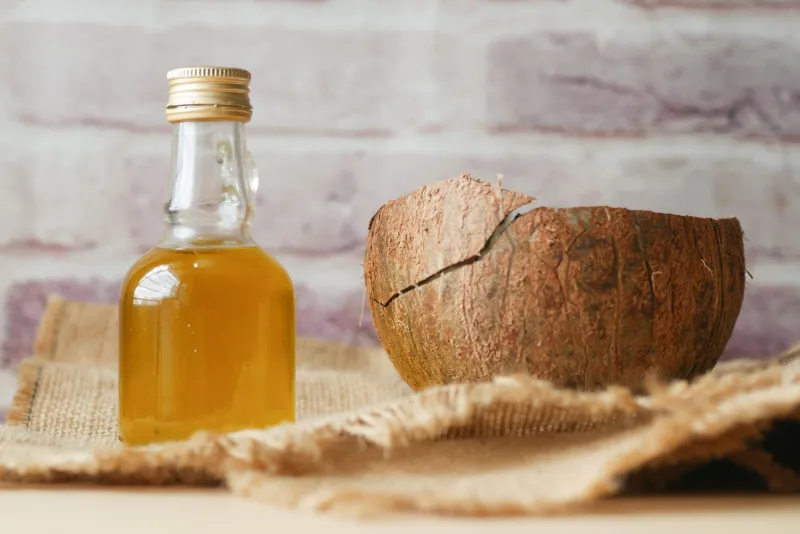
Coconut oil is the coastal South Indian and Kerala kitchen staple, and it behaves differently from the other two. It is solid at room temperature in most US kitchens, melting quickly in a hot pan. In Kerala and coastal Karnataka, it perfumes fish curries, vegetable thorans, avial, and coconut chutneys. In Tamil Nadu and Goa, it appears in everyday cooking and festive dishes alike. The flavor is not neutral. It is sweet, tropical, and unmistakable.
US stores sell both virgin and refined coconut oil. Virgin has a stronger coconut aroma; refined is milder and more all-purpose. For a thoran or fish curry, virgin is usually the better match. Store it in a cool cupboard; it will firm up below about 76°F, which is normal. If you want the aroma but not the sweetness, refined coconut oil is a reasonable middle path.
Substituting coconut oil is tricky because the aroma is the point. Neutral oil will sauté the mustard seeds and curry leaves, but the finished dish will taste flatter. Butter or ghee will push the dish north, away from the coast. If you are cooking for someone who dislikes coconut, use a mild neutral oil and add extra curry leaves—but call it a variation, not the original.
A Few Plates Where the Fat Is the Message
Take dal tadka. Make it with ghee and you get a soft, rounded, almost luxurious finish. Make it with mustard oil and the tempering feels sharper and more assertive. Same lentils, different accent.
Cabbage thoran is another clear case. Coconut oil, mustard seeds, curry leaves, and grated coconut give the dish its coastal identity. Swap in canola oil and the cabbage still cooks, but the plate loses its perfume.
Bengali fish curry is perhaps the bluntest example. Mustard oil gives the gravy its pungent backbone. Ghee would make it richer and more northern in feel. Neither is wrong, but they are not the same dinner.
And jeera rice? Ghee is the quiet classic. A little goes a long way, especially if you bloom the cumin in it before folding in the rice.
Buying and Storing Without a Treasure Map
Start with three jars: one good ghee, one food-grade mustard oil, one coconut oil you actually like. Keep them away from direct light and heat. Use clean, dry spoons. Ghee and coconut oil are forgiving; mustard oil is the one to watch for staleness. Buy small bottles of mustard oil if you cook Bengali food only occasionally.
For US supermarket shoppers, the Indian grocery aisle is usually the best bet for mustard oil and ghee, while coconut oil is everywhere. Do not assume the most expensive jar is the best. Look for simple labels and a fat that smells clean.
The Swap That Actually Works
The practical rule is simple: match the fat to the region, then match the region to the dish. If you are cooking a Punjabi dal or a Mughlai-style braise, reach for ghee. If you are cooking Bengali fish or a mustard-forward pickle, use culinary mustard oil. If you are cooking Kerala-style vegetables or coastal fish, coconut oil is not a garnish—it is the point.
Swaps are fine when they are deliberate. Ghee can stand in for butter in many Indian dishes. Coconut oil can handle a simple sauté. Mustard oil is the hardest to replace, so treat it as a specialty rather than a staple if you are just starting out. The fat you choose is not background noise. It is one of the first regional decisions you make, long before the spice hits the pan.