The Group Table Has a Geography: Ordering Indian Food for a Crowd Without Blurring Regions

Photo: Altitonantis, CC0, via Wikimedia Commons
Somewhere between the second and third shared plate, Indian food for a group can turn into a blur of orange gravies, basmati, and naan. That is not because the cuisine is repetitive. It is because group ordering often defaults to familiarity: butter chicken, tikka masala, saag paneer, a couple of breads, and maybe a biryani for ballast. It works, but it does not show what the menu can do.
A better approach is to treat the table like a map. You do not need to order from every region. You need to choose a few clear anchors, balance dry dishes against gravy dishes, and build in cooling and crunchy sides. Then you sequence the breads and rice so the table has structure instead of starch creep.
Start With Anchors, Not a Cuisine
For a group of four, choose two regional or cooking-style anchors. For six, choose three. For eight, choose three or four, depending on how many sides and breads you are adding. An anchor is not just a protein. It is a dish that tells you where you are: a Punjabi dal, a Chettinad chicken, a Goan fish curry, a Hyderabadi biryani, a Gujarati kadhi, a Bengali fish preparation, a Kerala vegetable stew.
If the menu is mostly North Indian, you can still create contrast by using cooking styles: tandoori dry dishes, slow-cooked dal, a yogurt-based curry, a biryani, and a chaat or snack. If the menu spans regions, use that range deliberately instead of ordering four dishes that all taste like the same tomato-onion base.
The Plate-Building Rules
Use these as a checklist, not a rulebook.
- Balance dry and gravy. For every two gravy dishes, order one dry dish. Dry dishes give the table texture and keep the meal from turning into soup.
- Include one cooling side. Raita, cucumber salad, plain yogurt, or a lassi. This is not filler; it is how a table with mixed spice tolerance stays enjoyable.
- Add one crunchy thing. Papad, fryums, onion salad, or a crisp snack. Crunch gives the palate a reset.
- Order one mild anchor. Not bland—mild. A yogurt-based curry, a dal, a vegetable dish with warm spices rather than heat.
- Order one medium or hot anchor, and keep it clearly labeled. Let the heat live in one or two dishes instead of asking the kitchen to dull everything.
- Do not over-order bread. Two breads per three people is a reasonable starting point, plus one rice for the table. Add more only if the group is skipping rice.
- Order a pickle or chutney. A small bowl of achar or chutney can wake up every plate on the table.
Sample Orders That Hold Together
These are starting points for a US restaurant menu with familiar regional categories. Adjust to what is actually good that night.
Four People
- One North Indian anchor: dal makhani or a Punjabi dal.
- One South Indian anchor: Chettinad chicken or a vegetable kurma.
- One dry vegetable: aloo gobi or bhindi masala.
- One cooling side: raita.
- One crunchy side: papad or onion salad.
- Two breads and one rice: garlic naan, roti, jeera rice.
- One pickle: mango achar.
This gives you a creamy dal, a spicy South Indian dish, a dry vegetable, and enough cooling and crunch to keep the table balanced.
Six People
- One North Indian anchor: chicken tikka masala or butter chicken, if that is what the group wants, but pair it with a drier North Indian dish.
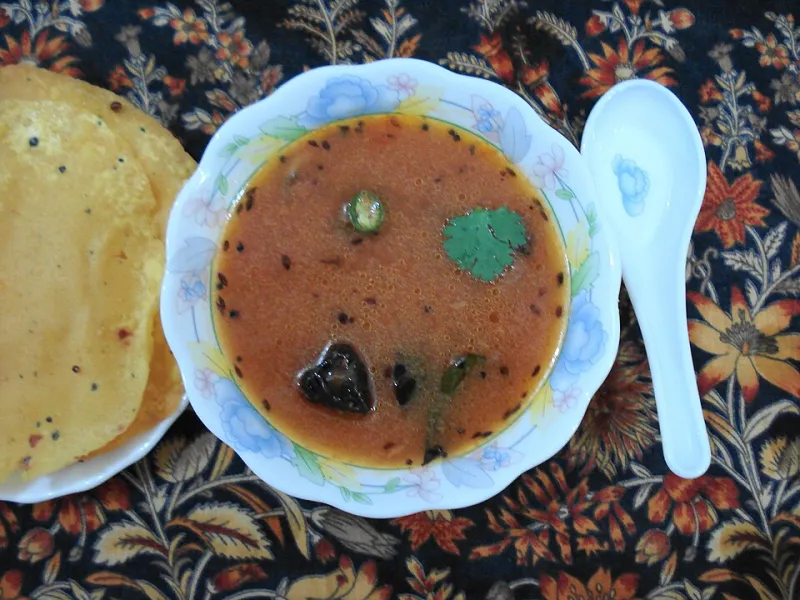
- One South Indian anchor: sambar or rasam plus a vegetable poriyal, or a Chettinad protein.
- One West Indian or Gujarati anchor: Gujarati kadhi or a Goan fish curry.
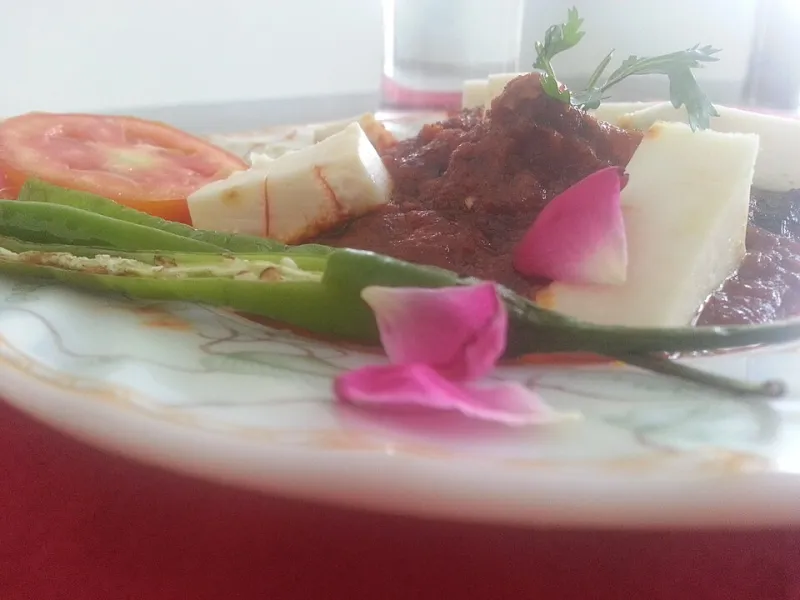
- One dry dish: tandoori chicken or paneer tikka.
- One cooling side: raita and a cucumber-onion salad.
- One crunchy side: papad.
- Three breads and one rice: naan, roti, paratha, plus biryani or jeera rice.
- One pickle and one chutney.
Eight People
- One North Indian anchor: dal makhani.
- One South Indian anchor: Chettinad chicken or Kerala fish curry.
- One biryani or rice anchor: Hyderabadi biryani or a vegetable biryani.
- One dry vegetable: baingan bharta or aloo gobi.
- One tandoori or grilled dish: chicken tikka or paneer tikka.
- One cooling side: raita and a large salad.
- One crunchy side: papad and fryums.
- Four breads and two rices: assorted naan, roti, and rice.
- Two pickles or chutneys.
At eight people, the goal is not more of everything. It is more contrast. The biryani can act as both a starch and an anchor. The dry dishes keep the table from drowning in gravy. The cooling sides make the spicy dishes more accessible.
Mixed Spice Tolerances
Do not ask the kitchen to make everything mild. That is how a regional menu turns into a bland one. Instead, order a range and tell the table what is what. Put the hottest dish at one end, the mildest at the other, and let people serve themselves. Ask for sauces on the side when possible, especially for dishes that are sauce-forward. A bowl of raita or plain yogurt on the table is more useful than a request to dumb down three curries.
If someone truly cannot handle heat, steer them toward dal, korma-style curries, yogurt-based dishes, rice, and bread. If someone loves heat, give them the Chettinad, the vindaloo, or the chili-forward dish—but make sure there is something cooling nearby. The table works when the extremes have company.
The Checkpoint Before You Order
Before you commit, scan the table you have built. Do you have at least one dry dish? One cooling side? One crunchy element? A clear mild option? A clear spicy option? Bread and rice in proportion? A pickle or chutney? If the answer is yes, you are probably in good shape.
The point of group ordering is not to sample the entire menu. It is to make a table that tastes like a place. Pick a few anchors, let them argue a little, and give everyone a way in.