Ladle Logic: How Rasam, Shorba, and Dal Bowls Tell You Where You Are
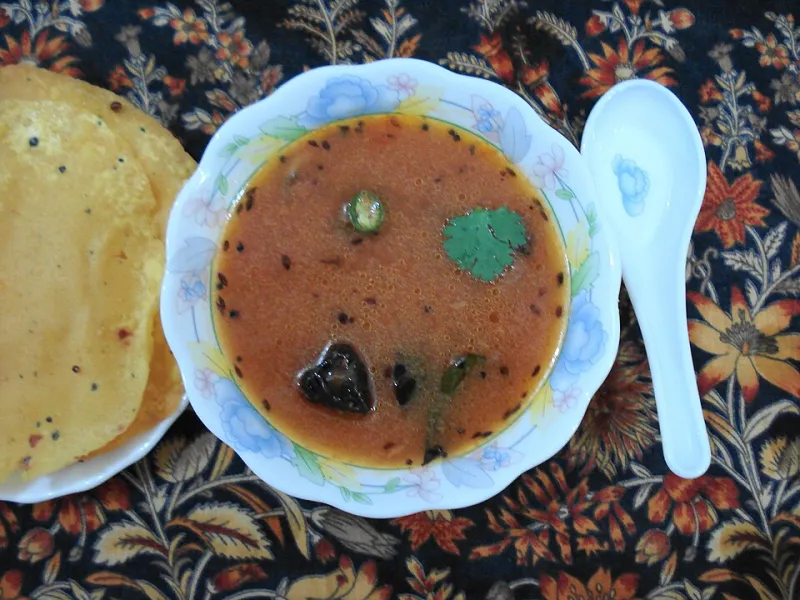
Photo: Miansari66, Public domain, via Wikimedia Commons
On a cold November evening, a bowl of broth can feel like the most sensible thing on the menu. Yet at many Indian restaurants in the US, the soup section gets skipped the way a salad bar gets skipped at a steakhouse: politely, quickly, and without much thought. That is a mistake. In Indian cooking, brothy bowls are not automatically the warm-up act. They can be a digestive, a side, a main event, or the most region-specific thing in the kitchen.
First, Stop Calling It an Appetizer
American menus train us to think in courses: appetizer, entree, dessert. Indian menus often use the same headings because restaurant menus need structure, not because the food always behaves that way. A rasam might show up under soups, but at a South Indian table it can be poured over rice near the end of the meal, or sipped from a cup like a savory tea. A shorba might be listed as a starter, but with bread it can carry a whole light lunch. A dal soup may be the simplest, most everyday bowl on the table and still be the one that tells you the most about the kitchen.
So treat the soup section as a set of clues, not a required first course. Ask how it is served. Ask whether it comes with rice or bread. Ask if it is meant to be shared. Those three questions will tell you more than the price will.
Rasam: The Pepper-Tamarind Bowl From the South
Rasam is the bowl to know if you like bright, tart, peppery flavors. The word itself suggests juice or essence, and that is the right frame: rasam is thin, aromatic, and built on tamarind, tomato, black pepper, cumin, curry leaves, and a finishing sizzle of mustard seeds. It is not a thick puree. It is not a cream soup. It is a sharp, warming broth with a little bite and a lot of fragrance.
There are many rasams. Tomato rasam is the friendly entry point. Pepper rasam leans hotter and more medicinal in spirit, the kind of thing people crave when they feel run down. Mysore rasam brings in lentils and a deeper, nuttier body. In a South Indian meal, rasam rice is a course unto itself, often arriving after the heavier dishes. As a restaurant order, it works beautifully as a light lunch with rice, or as a shared bowl beside biryani, dosa, or a plate of rich curries. It cuts through fat and resets the palate.
If you are new to rasam, do not expect a US-style cream of tomato soup. Expect something closer to a spiced broth with a tangy edge. Sip it first. Then pour a little over rice and see how the whole thing changes.
Shorba: The North's Slower, Silkier Ladle
Shorba comes from a different direction. With Persian and Mughlai roots, it is associated with North Indian and restaurant cooking, and it often has more body than rasam. You will see chicken shorba, lamb shorba, tomato shorba, and vegetable versions. Some are brothy and clear; others are lightly thickened and rounded out with aromatics. The best ones taste slow-simmered rather than spice-bombed.
On a US menu, shorba is usually offered as a starter, and it does that job well. But it is also a useful light meal when paired with naan, roti, or a small rice portion. Think of it as the Indian equivalent of a good chicken soup with a more complex aromatic profile: cumin, coriander, ginger, maybe a whisper of saffron or cream depending on the version.
Shorba is a good choice when you want something warming but not heavy, especially if the rest of the table is ordering creamy curries or fried starters. It gives you a break without sending you to a side salad.
Dal Bowls: Lentils in Their Most Slurpable Form
Dal is the backbone of Indian home cooking, and lentil soups are one of the easiest ways to see that. A dal soup is not the same as a thick dal tadka, though the two are cousins. The soup version is thinner, more brothy, and often finished with a tadka of hot ghee or oil, cumin, mustard seeds, garlic, or dried chile. Yellow moong dal makes a delicate bowl. Masoor dal gives you something earthier and rosier. Some versions are smooth; others keep a little texture.
This is where regional signals get subtle. A dal soup with a simple cumin-garlic tadka feels like North Indian home cooking. A South Indian sambar, which is a lentil-and-tamarind stew with vegetables, lives in the same broad family but usually belongs beside rice or idli rather than in a soup cup. If a menu lists both dal shorba and sambar, order one of each if you can. The comparison is worth it.
Dal soups are also the quiet value play on many menus. They are filling, inexpensive, and often better than they sound. Pair one with rice and a pickle, and you have a light meal that still tastes like a real meal.
How to Order One Without Derailing Dinner
Start by deciding what job the bowl needs to do. If you want a starter, share one rasam or shorba among two or three people and keep the portions small. If you want a light meal, order the soup with rice or bread and add a chutney or pickle for contrast. If you are ordering rich plates for the table, a rasam is often the better counterpoint because its acidity and pepper cut through cream and fat.
Ask whether the soup comes with rice. Many menus do not say, and the answer changes the order completely. Ask about heat level, too. Rasam can range from gentle to quite peppery. Shorba is usually milder but can carry chile heat. Dal soup is often the safest bet for a spice-averse diner, though the tadka can still bring warmth.
The Regional Read
You do not need to memorize a map to use the soup section well. Tamarind, curry leaves, black pepper, and a mustard-seed finish point south. Slow-cooked meat, aromatic North Indian spices, and a bread pairing point north. Lentils with a simple tadka point toward home-style cooking, the kind that does not need a fancy name to be good.
That is the quiet pleasure of ordering broth at an Indian restaurant. It is not the flashiest thing on the table. But it is often the most honest. On a chilly night, with rice or bread beside it, a bowl of rasam, shorba, or dal soup can be the thing you remember after the richer plates are gone.