Fingers, Flatbread, and Rice: How to Eat Indian Food Without the Etiquette Anxiety
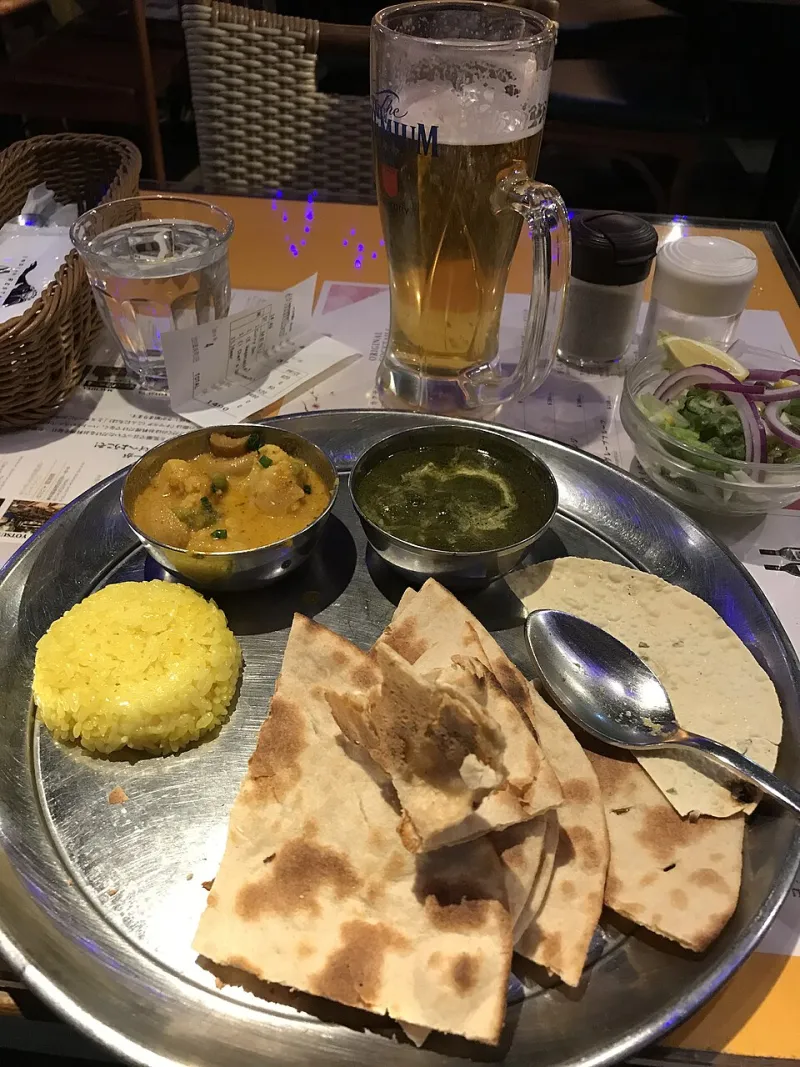
Photo: shankar s. from Poona (pune), India, India, CC BY 2.0, via Wikimedia Commons
At Darbar, one of the most common questions from first-time diners is some version of: should I use a fork? The honest answer is that it depends on the dish, the region, and the setting. Eating with your hands in India is not a single rule handed down from on high. It is a collection of techniques, some regional, some household-specific, and all fairly practical. You are not failing at Indian food if you reach for a spoon. You are also not showing off if you eat with your fingers. The point is to enjoy the meal.
The Hand Is Not a Fork With Fingers
In many Indian homes, eating with the right hand is customary, while the left hand is kept for serving, passing, or handling napkins and water. That is a broad norm, not a universal law, and it is not a moral judgment about left-handed people. In the US, restaurant tables come with utensils for a reason. If you prefer a fork and knife, use them. If you want to try eating with your hands, start with a dish that cooperates.
The bigger rule is simpler: clean hands, clean plate, and no reaching into shared bowls with the hand you are eating with. That is the etiquette that actually matters at a shared table.
North India: Tear, Pinch, Lift
In the north, bread often leads the meal. Roti, naan, paratha, and other flatbreads are built for hand-eating because they are flexible enough to pinch and scoop. The technique is not to shred the whole bread at once. Tear off a piece roughly the size of a bite, use your thumb and first two fingers to pinch a little curry, dal, or vegetable, and lift it together. The bread becomes both utensil and accompaniment.
At a restaurant, this is easiest with a dry-ish curry, a dal, or a paneer dish with a thick gravy. Very saucy dishes can be handled with bread too, but expect a little mess. That is normal. If you are sharing a platter of bread, take a piece onto your own plate first rather than tearing from the common basket. And if the bread is hot, give it a second. Your fingers will thank you.
Rice in the north is often eaten with a spoon, or with fingers in a more mixed style. There is no single correct approach. Watch the table, follow your host, and do what keeps the meal comfortable.
South India: Mix, Don’t Muddle
In much of South India, rice is the center of the plate, and the technique is different. You put rice on your plate, add sambar, rasam, yogurt, or a vegetable curry, and mix it in your own space with your fingertips. Then you gather a loose bite and use your thumb to guide it. The motion is light. You are not kneading the rice into paste, and you are not stirring the entire serving bowl.
This is where regional eating can look mysterious to an American diner. Sambar is not soup, and rasam is not a broth course in the Western sense. They are meant to season and moisten rice. Mixing them into rice is the point. If you order a South Indian meal at a restaurant, ask for a spoon if you want one. Nobody at Darbar will be offended. But if you want to try the hand technique, keep the mixing inside your own plate and use small amounts at first.
Shared Plates Need Serving Utensils, Not Ceremony
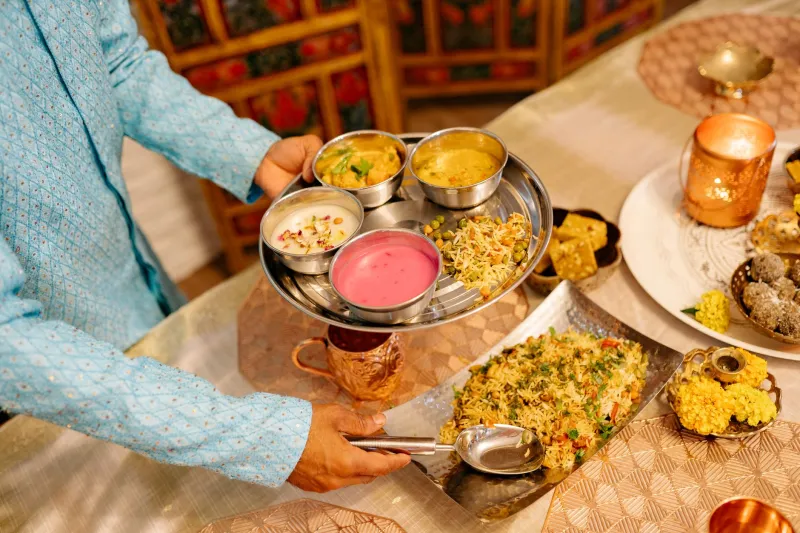
Family-style Indian meals often put several dishes in the middle of the table. The useful rule is the same one you would use at any American potluck: use the serving spoon. Do not dip your eating hand into a shared bowl of dal or pick from a common platter with your fingers. Put food on your plate first. If a restaurant brings a thali or a combination platter, that is already your personal spread, so hand-eating is more straightforward.
Ask for extra napkins or a finger bowl if you are eating with your hands. Many Indian restaurants provide one, and it is not a strange request. Keep the tablecloth out of it. A small stack of napkins beside your plate is your friend.
Why Technique Changes Texture and Taste
Hand-eating is not just a cultural preference. It changes the experience. Tearing bread lets you control the ratio of bread to filling. Mixing rice with sambar releases steam and aroma as you eat. Your fingers judge temperature before the food reaches your mouth. The meal slows down a little, and that is often the best part.
That does not mean hand-eating is automatically better. A fork is better for a soupy dish, a spoon is better for dessert, and a knife is useful when something needs cutting. The technique should serve the food, not the other way around.
A Low-Pressure Way to Start
If you want to try eating with your hands at your next Indian restaurant visit, order a bread and a thick curry or dal. Wash your hands, keep a napkin nearby, and tear small pieces rather than large ones. Use your right hand if that is comfortable, or use utensils and skip the experiment entirely. There is no authenticity exam at the table.
At home, set out a small bowl of warm water with lemon if you want the full experience, or simply keep napkins close. The goal is not to perform Indian dining culture for anyone. The goal is to eat well, share a table, and maybe learn a technique or two along the way. At Darbar, the fork and the hand are both welcome. The food is the point.