The Drink Menu Isn’t an Afterthought: Pairing Beer, Wine, and Chai with Regional Indian Plates
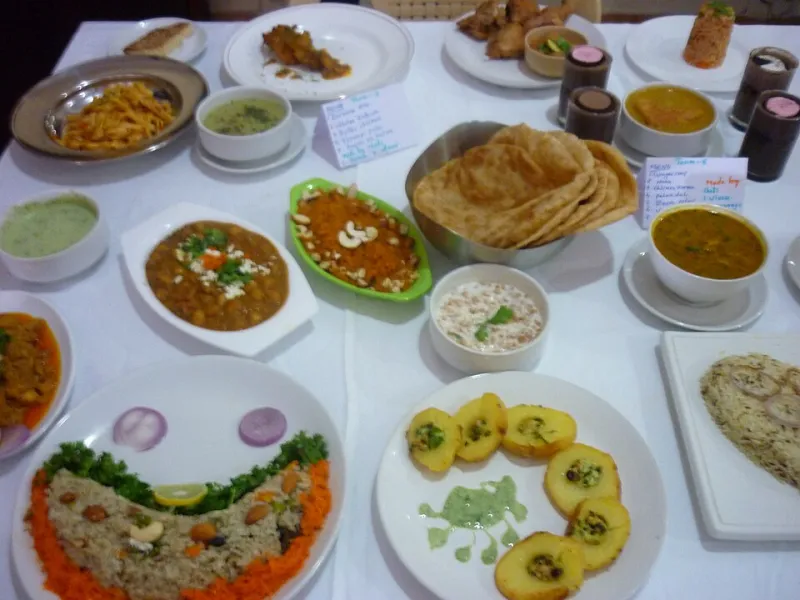
Photo: United Hotel Management Academy, CC BY-SA 4.0, via Wikimedia Commons
The mango lassi is a perfectly good drink. It’s also the answer most US diners reach for before they’ve even read the menu—a sweet, cold default that can quietly flatten the best part of a regional Indian meal. At Darbar, we’d rather you order something that makes the food taste more like itself. The good news: you don’t need a sommelier’s vocabulary. You need four levers and a willingness to experiment.
Start With Four Levers, Not a Drink List
Every pairing decision comes down to how a drink handles heat, fat, acid, and sweetness. Heat is the big one. Capsaicin—the compound behind chile burn—is fat-soluble, which is why a spoon of raita or a gulp of creamy lassi feels soothing. Alcohol can turn up the volume on heat perception, especially high-proof spirits and big, oaky wines. Sugar and fat calm the fire; acid resets the palate between bites.
Fat matters too. Fried snacks, ghee-rich gravies, and buttery breads leave a coating on your tongue. Carbonation and crisp acidity cut through it. Acid—the brightness in tamarind, yogurt, tomato, and lime—is echoed by drinks with lift. And sweetness is a tool, not a trick: a touch of residual sugar acts like a fire extinguisher, but too much turns spicy food into candy.
The Case for Crisp Lagers at the Start
If your table begins with samosas, pakoras, or chile fritters, skip the cocktail list and order a crisp lager. A Czech-style pilsner, a Mexican lager, or a dry cider does three things at once: carbonation scrubs the fat, gentle bitterness cuts through fried batter, and low alcohol keeps your palate sharp for the next course. Hoppy IPAs are the exception—their piney, resinous notes can clash with green chile and garam masala, and the bitterness piles up rather than clearing the deck.
This is also the moment to rethink the cocktail. A gin and tonic with a lime wedge works surprisingly well with fried snacks: the quinine’s bitterness and the citrus’s acid do the same job as a squeeze of lemon. Just keep the drink simple and cold. Sugary cocktails—the kind that taste like beach vacations—will bury a delicate chaat.
Where Wine Actually Earns Its Place
Wine and Indian food have a reputation for being difficult, but the difficulty is usually a mismatch of weight and heat, not a fundamental incompatibility. The most reliable white in the room is an off-dry Riesling. German Kabinett, Finger Lakes Riesling, or a Washington version with a few grams of residual sugar can handle Andhra-style chile chicken, Gongura lamb, or anything built on dried red chiles. The sugar tempers the burn, the acidity lifts the fat, and the fruit meets the spice without fighting it.
For tandoori meats and kebabs, look for a red with moderate tannin and generous fruit—Syrah, Malbec, or a California Zinfandel that isn’t too jammy. The char and smoke from the tandoor love a little grip, but high-alcohol wines will make the chile feel hotter than it is. Serve them slightly cool. If you want one bottle to carry a mixed table, a dry rosé is the diplomatic choice: enough structure for lamb, enough freshness for grilled vegetables and dal.
When the Dish Calls for Something Else Entirely
Some regional dishes resist the usual wine logic. Goan vindaloo, with its vinegar backbone and chile heat, pairs beautifully with a sour beer or a dry hard cider—the acidity matches the vinegar and the carbonation keeps the heat in check. Bengali mustard fish wants a dry Sherry or an off-dry Gewürztraminer, something with a savory edge and a little perfume. Kerala-style coconut fish curry is happiest with a hoppy pale ale or a dry Riesling; the coconut’s richness needs cut, not cream.
And for the chaat course—pani puri, bhel, papri chaat—think bright and bubbly. A witbier with orange peel, a dry lambic, or even a lightly sweet lime soda does more than a lassi because it keeps the palate refreshed between bites of tamarind and yogurt.
The Non-Alcoholic Lane Is Wider Than You Think
Masala chai is not just a dessert drink. Order a pot with samosas or pakoras and you’ll notice how the clove, cardamom, and ginger meet the fry oil and the spice. Salty lassi—chaas—is a better partner for rice plates than the sweet mango version because it cleans the palate without coating it. And a simple lime soda with a pinch of salt is one of the most underrated pairings on any Indian menu: acid, fizz, and a little salinity that makes dal and rice taste rounder.
Restaurant-Ready Combos to Order Tonight
- Samosa or pakora + crisp pilsner or dry cider
- Andhra chile chicken + off-dry Riesling
- Tandoori lamb kebab + cool-climate Syrah or Malbec
- Goan vindaloo + sour beer or dry hard cider
- Kerala coconut fish curry + Gewürztraminer or hoppy pale ale
- Chaat + witbier or lime soda
- Dal and rice + salty lassi or a pot of masala chai
Ordering With Confidence
The best pairing is the one that keeps the table talking. Ask your server how hot a dish really is, order a sparkling water alongside whatever else you choose, and don’t be afraid to try a sip of two different things with the same plate. Regional Indian food is broad enough that no single drink—not even the beloved mango lassi—can cover the whole map. Treat the drinks list as part of the menu, and the meal gets sharper, brighter, and a lot more fun.