Hot Fat, Whole Spices, Big Flavor: The Weeknight Power of Tadka
Tadka is the kind of technique that seems too small to matter until you taste the difference. You heat a little fat, add whole spices, wait for a sizzle, and pour the fragrant oil over a finished dish. In India, that step goes by many names—tadka, chaunk, baghar, phodni—and it is less a recipe than a final flourish that tells you where dinner is coming from. For a home cook in the US, it is also the fastest way to make everyday dal, vegetables, and even eggs taste more regional. Thirty seconds of attention can do more than an hour of simmering.
Why hot fat does the heavy lifting
Whole spices hold their aroma in oils. Heat alone can wake them up, but fat carries those aromas evenly through a dish and gives them staying power. That is why a pinch of cumin seeds tossed into a dry pan smells sharp and brief, while the same cumin bloomed in ghee smells round, nutty, and persistent. The fat is not decoration. It is the delivery system.
Ghee is the classic choice in many Indian kitchens, and it brings a toasted dairy note that suits dal, rice, and vegetables. Neutral oils such as canola or avocado work well too, especially if you want the spices to speak without a butter backdrop. Mustard oil has a pungent edge that belongs in some eastern and northern preparations, but it is not a neutral stand-in. Use what you have, but choose a fat you would be happy to taste on its own.
A regional spice map, not a rulebook
India is too varied for a single tadka formula. The point is not to memorize one combination but to notice how kitchens across the country pair fat with whole spices. Think of these as starting points, not borders.
Mustard seeds and curry leaves. In much of southern India, black mustard seeds are the first thing to hit the pan. They pop, turn gray-black, and signal that the fat is ready. Curry leaves go in next, along with dried red chile and sometimes urad dal. The result is a sharp, green, faintly nutty tempering that belongs over coconut chutney, cabbage poriyal, or plain rice. Frozen curry leaves are a practical US supermarket find and outperform dried ones by a wide margin.
Cumin seeds and dried chiles. In many northern and western kitchens, cumin is the backbone. Whole cumin seeds bloomed in ghee with a dried red chile and a pinch of asafoetida create a warm, savory finish for dal, chickpeas, and yogurt-based dishes. Cumin burns quickly, so keep the heat moderate and have your pot of dal within arm's reach.
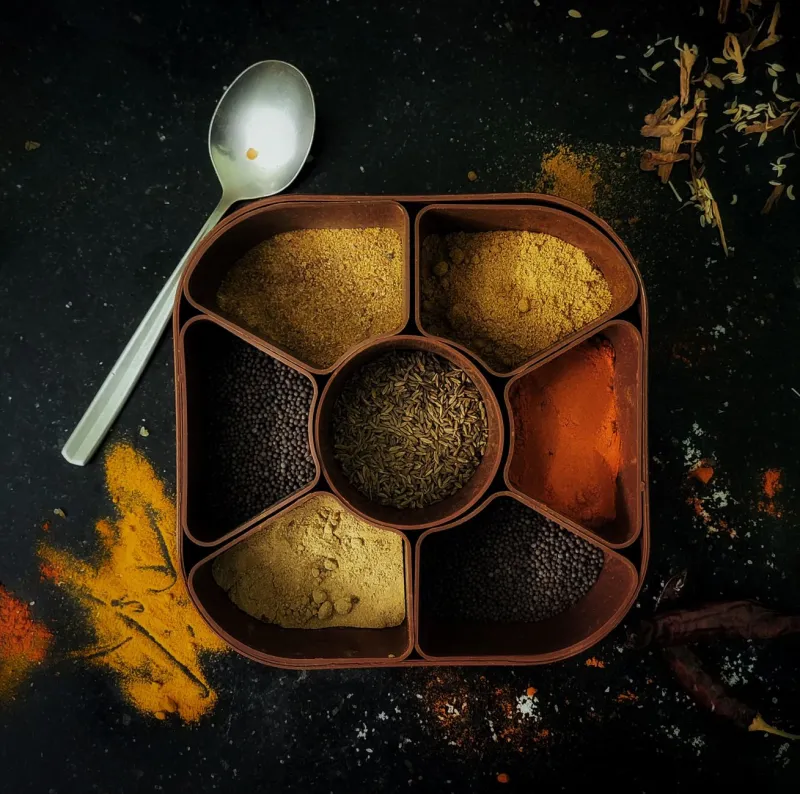
Panch phoron. Bengali cooking often uses a five-seed mix of cumin, fennel, fenugreek, nigella, and mustard. It is gentler and more aromatic than a mustard-heavy southern tadka. Bloom it briefly in mustard oil or a neutral oil and pour it over potatoes, lentils, or fish. The fenugreek can turn bitter fast, so pull the pan off the heat as soon as the seeds darken.
Asafoetida and cumin. A pinch of asafoetida—hing—is a common addition in many Indian kitchens, especially in dishes where its savory, onion-garlic-like note is welcome. It needs only a second in hot fat. Add it after the cumin seeds have started to sizzle, not before.
The thirty-second method
The technique is simple, but the window is narrow. Set up everything before you turn on the heat: a small skillet, your measured spices, and the dish you are finishing. Once the spices hit the fat, there is no time to hunt for the chile powder.
Warm one to two tablespoons of fat in a small pan over medium heat. Drop in one seed as a test. When it sizzles, add the whole spices. Move the pan gently so they bloom evenly. As soon as the spices smell toasted and nutty—not acrid—add any quick aromatics such as curry leaves or dried chile, give them a few seconds, and pour the entire contents over the dish. Stir once and serve.
The most common mistake is heat that is too high. Whole spices can go from fragrant to burnt in less time than it takes to say so. If the seeds turn black and the fat smells sharp, start over. Burnt tadka will make an otherwise good dish taste bitter.
US kitchen tips that save the sizzle
Use a small skillet or butter warmer rather than a large sauté pan. A smaller surface keeps the fat deep enough to coat the spices and makes the pour easier to control. A splatter screen helps with mustard seeds, which pop like tiny popcorn.
Keep whole spices in a cool, dark place and buy them in small amounts. Pre-ground spices are fine for many things, but tadka depends on whole seeds and dried chiles. If your cumin smells like dust, it will taste like dust.
Finally, remember that tadka is a finisher. It is not a sauté step for raw vegetables. Pour it over cooked dal, roasted cauliflower, scrambled eggs, yogurt, or rice. The heat of the dish will release the aromas one more time at the table.
Try one combination this week. Cumin and dried chile over dal is a good first move. Mustard seeds and curry leaves over cabbage is another. Once you get the thirty-second timing, you will start to hear the difference before you taste it.