Hing, Unhidden: The Savory Pinch That Makes Indian Cooking Click
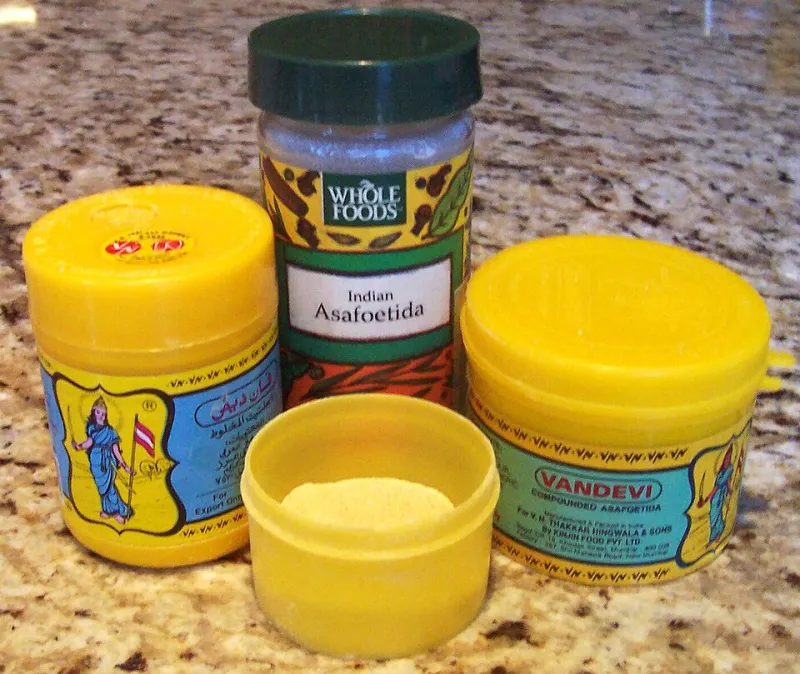
Photo: Unknown, CC BY-SA 3.0, via Wikimedia Commons
Open a jar of asafoetida and the first impression is not exactly dinner. The smell is sharp, sulfurous, and lingering—closer to a warning than an invitation. But heat it in ghee with a few mustard seeds or cumin, and something shifts. The harshness burns off, and what remains is a low, savory hum that makes a pot of dal taste fuller, a pan of green beans taste rounder, and a bowl of chaat taste like it has been hiding a secret.
That is the strange bargain of hing, as asafoetida is called in Hindi and many Indian kitchens. It is one of the most useful spices in regional Indian cooking and one of the least understood on American spice racks. It is not a chili, not a masala blend, and not a stand-in for onion or garlic in the simple swap sense. It is a fixer—a small, quiet ingredient that fills in the spaces around other flavors.
What Hing Actually Is
Asafoetida comes from the resin of several Ferula plants, relatives of fennel and celery that grow in parts of Iran, Afghanistan, and Central Asia. The resin is harvested, dried, and sold either as a hard lump or, far more commonly in the US, as a compounded powder. That powder is not pure resin. It is cut with rice flour or gum arabic so it can be spooned and measured without turning into a sticky mess. This is why a jar of hing powder can look like pale yellow flour and still smell like a whole spice cabinet arguing.
In India, the names change as you move across the map: hing in Hindi and Gujarati, perungayam in Tamil, kayam in Malayalam, ingu in Kannada and Telugu. The ingredient itself is used in different amounts and at different moments depending on the region. In South Indian sambar and rasam, it is often part of the initial tempering. In Gujarati kadhi, it slips into the yogurt base. In Punjabi dal, a pinch in the tadka can make a simple pot taste slower-cooked than it is. In Bengali kitchens, it appears more selectively, but it is still part of the pantry logic.
Why It Needs Hot Fat
Raw hing is not meant to be eaten by the spoonful. The sulfur compounds that give it that aggressive smell are volatile, and fat is the best way to tame them. Bloom the powder in ghee or oil over medium heat for ten to twenty seconds, just until the raw edge disappears. Do not let it brown or burn; burnt hing turns bitter and sulky. If you are using a compounded powder, a brief bloom is usually plenty. If you are using pure resin, you need even less and a gentler hand.
The classic move is to add hing to the same pan as mustard seeds, cumin seeds, or dried red chilies. The spices build a base together. The mustard seeds pop, the cumin turns fragrant, and the hing settles into the fat. Then you add your vegetables, dal, or broth. The result is not a recognizable hing flavor in the finished dish. It is more like a shadow—a savory depth that makes people ask what else is in there.
Hing Is Not Onion or Garlic
Many US cooks first meet hing as a substitute for onion and garlic in Jain or strict vegetarian cooking. That is a real use, but it is not the whole story. Hing does not taste like onion. It does not taste like garlic. It has a resinous, savory, almost fermented note that sits underneath other flavors rather than on top of them. If you use it expecting a one-for-one swap, you will probably be disappointed. If you use it as a base note, you will understand why it has survived in Indian kitchens for centuries.
Think of it the way you think of fish sauce or anchovy in a braise: not a headline ingredient, but a builder of body. A little hing can make a meatless dish taste less thin. It can make a lentil soup feel more complete. It can sharpen the edges of a snack without adding heat.
A US Kitchen Buying Guide
For most home cooks, a small jar of compounded asafoetida powder is the right starting point. Indian grocery stores usually carry several brands, often in the spice aisle or near the front counter. Look for a jar with a recent date and a tight seal. The powder should smell strong—unpleasantly so—but not stale or dusty. Yellowish hing powder is common and somewhat milder; darker varieties can be more resinous and potent. Start with the yellow compounded powder and learn how it behaves in your pan.
Pure resin is available, but it is intense and tricky to handle. It can be dissolved in hot oil or water, but the learning curve is steeper. Unless you are cooking from a regional Indian recipe that specifically calls for the resin, the compounded powder will do the job.
Store hing in an airtight jar away from light and heat. It will not go bad quickly, but it will lose its punch. For long storage, keep the jar in the freezer and let it come to room temperature before opening so condensation does not get inside. Double-bag it if you are sensitive to the smell. The scent is strong, but it does not usually transfer to other foods once the jar is sealed.
Ratios That Won’t Overwhelm
Start small. For a pot of dal serving four, use about 1/8 teaspoon of compounded hing in the tadka. For a dry vegetable dish serving four, use a scant 1/8 teaspoon. For a yogurt-based kadhi or a chaat topping, use a pinch—literally what sticks to your fingertips—and bloom it briefly if the recipe calls for a tempering. If you are new to hing, use half of what a recipe suggests and adjust the next time. It is easier to add depth than to remove it.
Hing works well with cumin, mustard seeds, dried red chilies, curry leaves, and turmeric. It also pairs nicely with tamarind and yogurt, which is why it shows up in so many South Indian and Gujarati preparations. It does not need to be in every dish. A little goes a long way, and restraint is part of the point.
Restaurant Clues
You can often spot hing’s effect in a restaurant without seeing it on the menu. A dal that tastes rounder and more savory than its short ingredient list suggests may have had a hing tadka. A vegetable stir-fry with a savory bass note under the spice may have been built on it. Chaat that hums under the yogurt and chutneys often carries a pinch. Sambar with a deep, almost meaty backbone—despite being vegetarian—is another clue. These are not proof, but they are the kind of signals that make regional Indian cooking fun to read.
At Darbar Indian Cuisine, we think of hing as the quiet fixer in the pantry. It is not the spice you show off. It is the one you reach for when a dish needs to settle into itself. Buy a small jar, bloom a pinch in hot fat, and pay attention to what changes. The smell will surprise you first. The taste will convince you later.