Build-Your-Own Chaat: The Regional Indian Snack Board Your 2026 Holiday Party Needs
Why Chaat Beats the Usual Holiday Board
Every December, the same cheese board shows up: three wedges of cheddar, a sad pile of grapes, and a box of water crackers. It is fine. It is also forgettable. A chaat board asks guests to do something better—build their own bite, layer crunch with tang, and decide for themselves how much heat they want. That is the energy a 2026 holiday party needs.
Chaat is not one dish. It is a family of Indian street snacks built on contrast: something crispy, something soft, something cool, something sour, something sweet, and a shower of spice. The board format works because chaat is already modular. You set out the parts, stack a few bowls, and let people play. The result looks generous, travels well across regional India, and gives your guests a genuine alternative to the usual holiday spread.
The Balance Rule: Sweet, Sour, Salty, Spicy, Crunchy
Before you shop, learn the five notes that make chaat work. Crunch comes from papdi crackers, sev, puri shells, and fried lentils. Sour comes from tamarind, lemon, amchur (dried mango powder), and yogurt. Sweet comes from dates, jaggery, and pomegranate. Salty comes from black salt, regular salt, and chaat masala. Spicy comes from green chilies, red chili powder, and fresh ginger.
A good chaat board hits all five in every bite. If your chutneys lean sour and spicy, add a sweet tamarind-date chutney and a cool yogurt drizzle. If your toppings are mostly soft, keep a bowl of sev nearby for texture. The board should look abundant but not chaotic. Three chutneys, two crunchy bases, one or two soft fillings, and a handful of fresh toppings are enough.
A Regional Route Across the Board
You can build a chaat board that stays in one region, or you can let it travel. For a holiday party, the traveling version is more fun and more conversational.
Start in the north with papdi chaat: crisp flour crackers topped with boiled potato, chickpeas, yogurt, tamarind chutney, mint chutney, sev, and a pinch of chaat masala. This is the anchor of the board and the easiest entry point for guests who have never built chaat before.
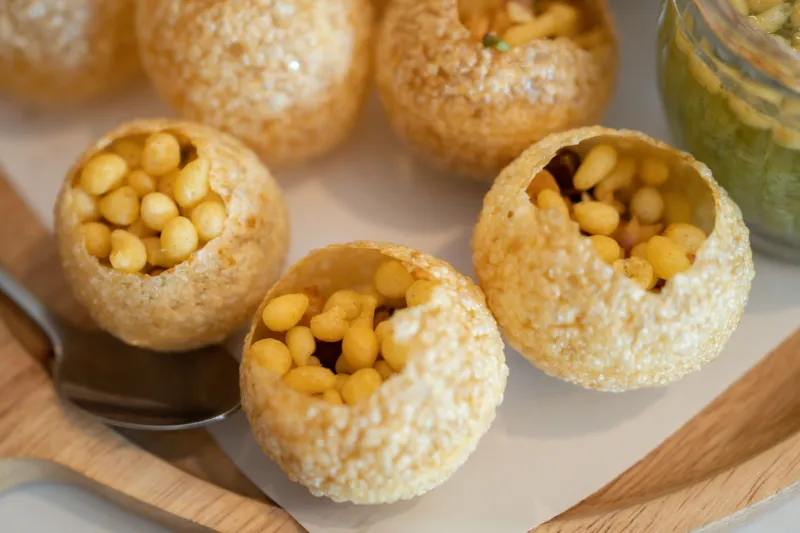
Move west with pani puri. Set out hollow puri shells and a small pitcher of spiced water—pani—made with mint, cilantro, green chili, cumin, and black salt. Guests crack the shell, spoon in potato or chickpeas, dip, and eat in one bite. It is interactive, a little messy, and exactly the kind of thing that gets people talking.
Head south for a coconut-forward touch. A small bowl of coconut chutney—fresh coconut, green chili, ginger, mustard seeds, and curry leaves—adds a cool, nutty counterpoint. Pair it with a simple sundal, a South Indian chickpea salad tossed with mustard seeds, curry leaves, and grated coconut. It is not classic chaat, but it belongs on the board because it brings the southern coastline into the spread without demanding extra work.
What Goes on the Board (and What Stays on the Side)
Keep the crispy things crispy. Papdi, sev, and puri shells should sit in separate bowls or piles, not under wet toppings. Soft components—boiled potato, chickpeas, yogurt—get their own bowls. Chutneys go in small jars with spoons. Fresh toppings like chopped red onion, tomato, cilantro, and pomegranate seeds can be arranged in little mounds around the edge.
Set out a small bowl of chaat masala and a shaker of red chili powder so guests can adjust the final spice level. Add lemon wedges and a bowl of plain yogurt. If you want protein, keep it simple: chickpeas and potato are traditional, but a bowl of pan-fried paneer cubes or shredded chicken works for a heartier holiday crowd.
Label the chutneys. Not everyone knows what tamarind looks like, and a little card that says 'sweet-tart tamarind' or 'spicy mint-cilantro' makes the board friendlier. Put the mildest chutney first and the hottest last.
Your US Shopping List
You can find most of this at an Indian grocery store, and many items are now in mainstream supermarkets.
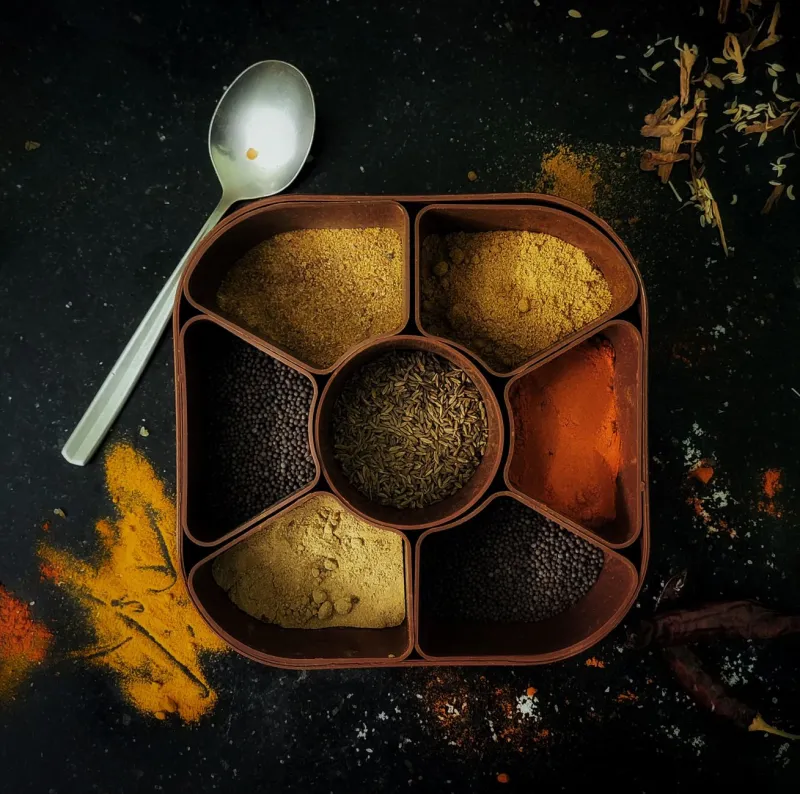
For the base: papdi crackers, sev (fine and thick), pani puri shells, and plain yogurt. For the fillings: canned chickpeas, potatoes, and optional paneer. For the chutneys: tamarind concentrate, dates, fresh mint, fresh cilantro, fresh coconut (or frozen grated coconut), garlic, ginger, green chilies, and lemons. For the spice shelf: cumin seeds, coriander seeds, black salt (kala namak), chaat masala, amchur, red chili powder, mustard seeds, curry leaves, and asafoetida. For fresh toppings: red onion, tomato, cilantro, pomegranate seeds, and sev for the final shower.
Make-Ahead Timeline
Two days before: make the tamarind-date chutney. It thickens and deepens in the fridge. Toast and grind any whole spices you need. Boil potatoes and store them whole in the fridge.
One day before: make the mint-cilantro chutney and the coconut chutney. Keep them in airtight jars. Chop onions and tomatoes, but store them separately and drain any excess liquid before serving. Mix the pani puri water and refrigerate it in a pitcher.
Day of: warm the papdi if they have gone soft, drain the chickpeas, and set out the yogurt. Assemble the board no more than an hour before guests arrive, keeping the crispy elements in their own bowls. Replenish sev halfway through the party—it disappears fast.
Chutney Spice-by-Spice: The Flavor Engine
Chutneys are where chaat gets its personality. Each one is a small spice lesson.
Mint-cilantro chutney: fresh mint, cilantro, green chili, ginger, lemon, and a pinch of black salt. Cumin adds warmth, and a little asafoetida gives it that savory depth. Blend it thick enough to spoon, not pour.
Tamarind-date chutney: tamarind concentrate, soaked dates, jaggery or brown sugar, cumin, ginger, and red chili powder. Black salt rounds out the sweetness. Simmer it until it coats a spoon, then cool. This is the sweet-sour note that keeps the board from tasting too sharp.
Coconut chutney: fresh coconut, green chili, ginger, and a tempering of mustard seeds, curry leaves, and asafoetida in hot oil. The tempering is not optional—it is the difference between flat coconut and a chutney that tastes alive.
Garlic-red chili chutney: garlic, dried red chilies, lemon juice, and salt. Soak the chilies first, then blend. This is the hottest jar on the board, so keep it at the far end and label it clearly.
Chaat masala ties it all together. It is a blend of amchur, black salt, cumin, coriander, asafoetida, ginger, black pepper, and chili. A light dusting over the finished board adds a tangy, savory finish that guests will notice without being able to name.
Assembly and Serving Notes
Use a large wooden board or a tray with a rim. Put the chutneys and yogurt in small jars at the center, then build outward with the crunchy bases, soft fillings, and fresh toppings. Give guests small plates and spoons. A chaat board is not a dip board—people need to build, so leave space between bowls.
If you are serving a crowd, set up two smaller boards instead of one giant one. It keeps lines moving and makes the table feel fuller. Keep a backup bowl of sev and papdi in the kitchen so you can refresh the board without breaking the visual spread.
A Holiday Board With a Point of View
A chaat board is more than a snack spread. It is a small tour of regional India, built on spice and texture rather than cheese and charcuterie. It gives your guests something to do, something to talk about, and something to remember. This holiday season, put the cheddar away and let them build a bite. The board will do the rest.